
BIOPHILIC BLUEPRINT
Your Home May Be Working Against You, and You’d Never Know It
Overwhelm, poor sleep, and low motivation can have hidden causes in your space, and most are easier to fix than you’d think. A Biophilic Blueprint starts with a read of your home through the lens of biophilic design and the psychology of space, so you know exactly what to change first.
What a Trained Eye Notices
Airflow, light, floor plan, mirror placement, sound, color, and décor can all shape how well you sleep, focus, and feel at home.
Stress-Causing Factors: These five everyday examples may be affecting you more than you know:
- HOME IDENTITY — If your home still looks the way it did before a divorce, a loss, or a hard year, it could be quietly holding you in the pain of that chapter, or chipping away at your self-esteem.
- FLOOR PLAN — A chair with its back to an open doorway can keep your brain on low alert, even in a room that looks perfectly calm. Shifting your floor plan can help you feel more in control of your environment, and more empowered in your life.
- ART — The way your art is hung, or not hung, could be creating a small daily stress you don’t need.
- FIXABLES — That patch on the wall from art you moved months ago could be quietly keeping your brain “unfinished.”
- COLOR — A dissonant color palette can trigger a stress response so subtle you may never trace it back to the walls.
The Check List below walks through more, and how each one can be resolved.
Biophilic Blueprint & Consultation
This isn’t a typical design consultation. It’s an objective, trained read of what’s happening in your space, backed by science — a fusion of biophilic design, which looks at how light, air, and nature shape your body, and the psychology of space, which looks at how your floor plan, lighting, decorative objects, and the placement of your things shape your mind. That includes your identity, beliefs, emotions, habits, focus, self-esteem, and even relationship dynamics.
Together, they explain far more about how a room affects you than either one alone.
Where: In person in Los Angeles, or virtually, anywhere in the world.
What Is Biophilic Design
Biophilic design is a field that focuses on how humans need a connection to the natural world, and how our bodies respond to it physically, mentally, and emotionally.
It draws on principles like natural light, a visual connection to nature, and natural materials, organized into 14 recognized patterns by Terrapin Bright Green. The research is compelling: environmental researchers designed offices with nature sounds, indoor plants, projected greenery, and natural materials, and over eight weeks found significant improvements in cognitive performance, enjoyment of the space, and stress reduction.
THE CHECK LIST | What Your Blueprint Covers
Your Biophilic Blueprint is a written, room-by-room plan created after your 2-hour consultation. It covers sleep, calm, light, sound, materials, and more, with clear priorities so you know exactly where to start. It arrives within one week, yours to keep and refer back to as you make changes.
SLEEP
Many factors in a bedroom can affect sleep: air quality, light temperature, bed position, mirror placement, wall color, and even the objects you see last at night. Light is a good example. Warm, dimmable lighting at 2,700K or warmer helps protect melatonin in the evening, while cool, bright morning light helps set your body clock for the night ahead. Air exchange also has strong research support for better sleep.
Resolve: We’ll evaluate each of these factors in your bedroom and map out the changes in your Blueprint.
CALM
Many things in a home can quietly add to stress or ease it. One of the simplest is anything left unfinished: a patched wall, a loose handle, a stalled project, or a stack of paperwork in plain sight. Each one can nag at your brain like an open to-do, adding more stress than you realize. Remedies can be as simple as finishing small repairs, creating a home for paperwork, or clearing one surface.
Art and color can cause overwhelm too. Art that’s hung poorly, or that carries the wrong memories, can rev up stress instead of calming it. And a dissonant color palette can force your mind to work harder to process the visual chaos.
Resolve: We’ll point out what in your space may be working against your sense of calm, and come up with solutions to replace it with what supports you.
FEELING SAFE
Sitting with your back to a door can keep your brain on low alert, even in a room that looks perfectly calm. Your nervous system is wired to watch for what’s coming, so a seat with an open doorway behind it, and no clear view ahead, never lets you fully relax. Small floor plan shifts can change how safe a home feels, and help you feel more grounded and in control.
Resolve: We’ll arrange your seating, work area, and bed so your space feels both open and protected, often with no new furniture required.
SOUND
Noise is one of the most underestimated stressors in a home. Research consistently links noise exposure to elevated cortisol and heart rate. Your body can treat an unresolved acoustic environment as an ongoing low-grade threat, even after you’ve tuned it out.
Resolve: We’ll assess the sound in your space and suggest beautiful ways to soften it: no foam panels, no dorm-room fixes.
LIGHT + NATURE
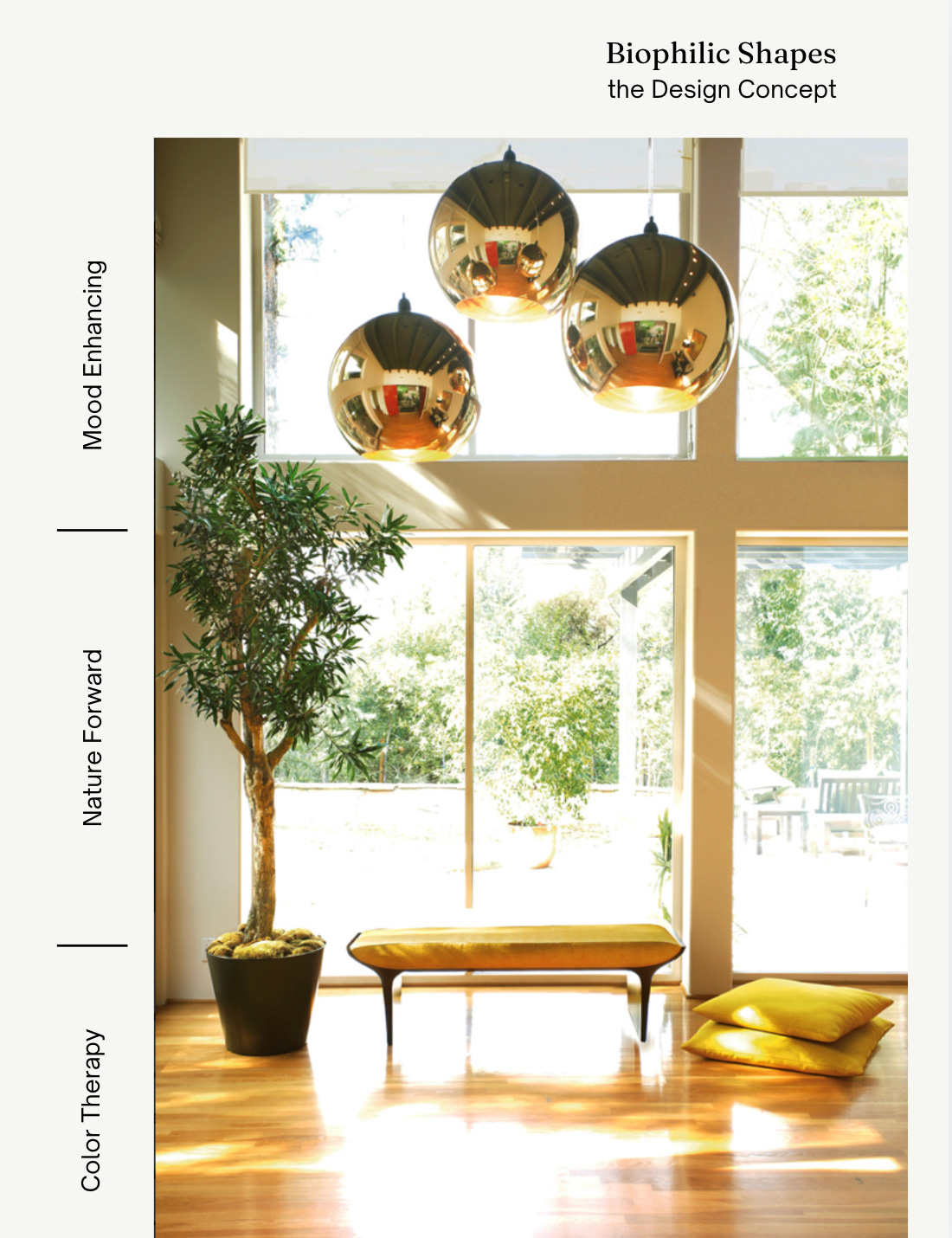
Bringing nature in is more than adding a plant. Natural light is one of the most powerful tools in biophilic design, and there are many creative ways to get more of it: opening up the right wall to let light flow through, choosing window treatments that welcome daylight instead of blocking it, adding a sun tunnel for a soft glow at a fraction of a skylight’s cost. Another example is knowing how to place a mirror to bounce light and create an optical illusion of the room looking and feeling more expansive.
Where natural light can’t reach, decorative lighting can create a warm, restorative atmosphere instead, with layered lamps and sconces in place of harsh overhead light. And where you place greenery in your floor plan determines whether it actually helps you feel better.
Resolve: We’ll show you how to maximize your natural light, where greenery will do the most good, and create a lighting plan, from electrical layout to bulb recommendations, including for rooms with little to no natural light.
SPACIAL PERCEPTION
Our nervous system is directly impacted by the way we perceive our space. Cramped spaces can hold us in fight-or-flight, through constant awareness of our physical parameters within the space.
Resolve: Kim’s specialty is creating expansion in small rooms, or intimacy in larger rooms. Regardless of the actual size of the room, feeling a sense of expansiveness, allows us to feel free subconciously. This can lead to more creativity, greater calm, and better focus.
MATERIALS
What’s in your space matters as much as how it’s arranged. Non-toxic, wellness-forward materials can reduce a category of chemical and sensory stressors most people never think to question. Airflow matters here too: furniture that blocks a room’s natural cross-breeze can undercut the air quality work already being done.
Resolve: We’ll recommend healthier materials from designer resources, so you never have to choose between wellness and style.
SCENT
Scent is closely tied to memory and emotion, and it’s one of the first things the body reads when you walk through the door. Yet the nose adapts quickly, so the smells you live with every day can fade from your awareness while still shaping how relaxed or on edge you feel at home.
Resolve: We’ll help you identify scents that may be working against you and suggest natural ways to create a home that smells like calm.
CLUTTER
Clutter doesn’t just add stress. It can quietly trigger shame. Consciously or not, every pile can read as proof that something was never finished. That feeling can stir up old beliefs about not doing enough, and those beliefs can lead to choices that aren’t in your best interest.
A clutter-free space sends the opposite message: you’re safe, and whatever you need is within reach. You feel taken care of.
Resolve: We’ll create clutter solutions that elevate the look of your space at the same time.
An Option in Your Consultation…
PSYCHOLOGY OF SPACE | THE DEEPER LAYER
Your space can support your emotions, ease stress, and build confidence.
The Check List covers the basics: how your space affects your body, from sleep to sound to light. This next layer goes further, into how your home can affect your mind, your memories, and your sense of self. It’s optional. If it feels right for you, we can include it in your consultation and your Blueprint.
YOUR HOME CAN AFFECT YOUR PSYCHE
Your inner emotional life gets played out physically in your space. When you’re overwhelmed, it can show up as clutter. When you’re stuck, your home can stay frozen in time right along with you.
Over time, the space holds onto those emotions, and begins to influence your thinking, your mood, and your beliefs about yourself. It becomes a circle: how you feel shapes your space, and your space shapes how you feel.
An artist surrounded by unfinished paintings, for example, may be triggering a quiet sense of shame every day without realizing it. A better setup: one finished painting on display, one work in progress, and the rest stored until they’re ready.
Resolve: We’ll help you see the story your space is telling, and reshape it to support who you’re becoming.
YOUR HOME CAN HOLD YOU IN GRIEF
People often redecorate during big life changes as a way of reclaiming who they are. When that doesn’t happen, the same wall color and furniture from before a loss can start to feel safe, simply because they’re familiar. Over time, the space can quietly hold you in the life it was decorated for.
Resolve: We’ll help you identify the one change that will have the biggest impact, and guide you through making it at a pace that feels right.
YOUR HOME CAN AFFECT SELF-ESTEEM
When your home no longer reflects who you are today, or holds little of your personal history, it can leave you feeling, subtly, like a guest in your own life. Homes that show your story tell your nervous system you belong here.
Resolve: We’ll create an easy-to-follow plan that brings more of you into your space and supports your goals for self-empowerment.
The psychology of space is a design practice, not therapy or mental health treatment. It’s meant to complement, not replace, support from a licensed professional.
TIPS FROM KIM’S PRESS INTERVIEWS
Maximizing Sunlight
“Every morning, open your window treatments to allow for maximum sunlight,’ Colwell says. … Colwell also advises installing sun tunnels in some of your ceilings, ‘which offer a soft glow of natural light at a fraction of the cost compared to a skylight.’She also says that you can utilize mirrors to bounce the sun’s natural rays and increase the light in a room.
— House Beautiful
Sound
“In my design for a musician’s home studio, my intention is to stabilize the sound with materials that absorb unwanted frequencies,” Kim told Design News Now. For a yoga and performance space, she did the opposite — a wood ceiling to create natural reverb.
— Design News Now
Color
“‘Yellow ignites joy,’ says interior designer and feng shui master Kim Colwell. ‘It is the antidote to sadness and represents clarity, confidence, and optimism.'”
— Livingetc
Nature
“When it comes to bringing the outside into our spaces, Colwell says that ‘connecting to nature is an inner hug.’ This is also known as biophilic design, a form of design that uses nature to support overall well-being.”
— House Beautiful
Lighting
“We think of lighting as being task-oriented, but the glow of a light that is only meant for ambiance relaxes us, betters our mood, and supports the natural circadian rhythm,” says Kim Colwell. A warm 2700 Kelvin LED bulb “replicates the feeling you get when you see the setting sun or candlelight.”
— House Beautiful
PSYCHOLOGY IN DESIGN | BACKGROUND
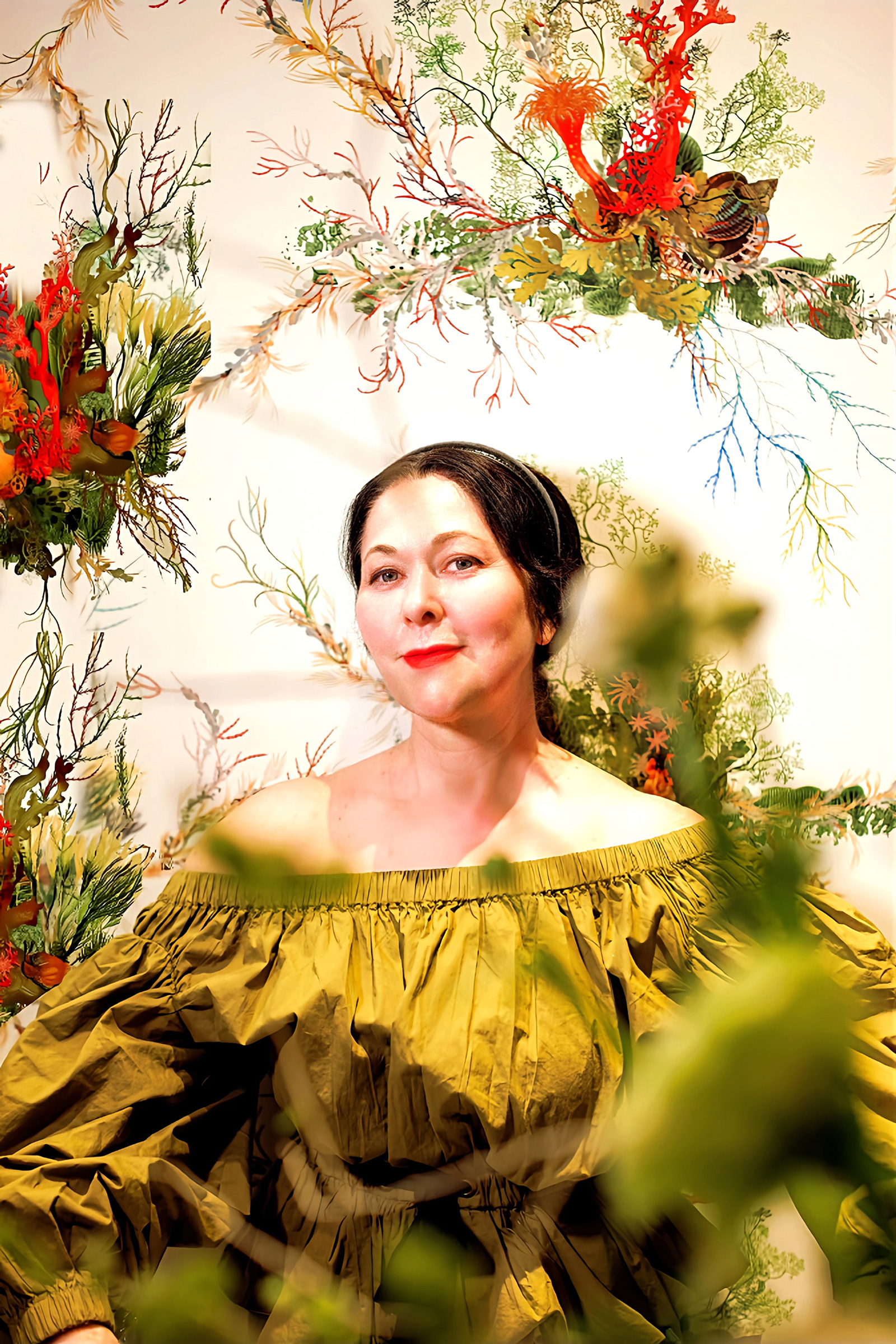
At NYU Tisch, where she earned her BFA in Theater, coursework in psychology (character, motivation, inner life) ran alongside her training in set design. There she saw the throughline: the psychology of a character and the psychology of a space are, in practice, the same discipline.
Designing a set is psychology in reverse. To show an audience, at a glance, that a character is depressed, stuck in a painful marriage, or ashamed of never finishing anything, a set designer builds that story into the room, so the audience understands before a single line is spoken. Kim reads a home the same way, only in the other direction: noticing what a room reveals about the person who lives in it, and what it may be quietly reinforcing.
From that foundation, she has devoted her work to the practical and complex ways we can all benefit from understanding how space affects the mind and our inner emotional life.
She has since studied biophilic design, LEED New Construction, and environmental psychology, and was invited through a student-led forum to co-teach a class on design and psychology for Cornell University interior design and architecture students. She has also spoken for the Los Angeles chapter of Cornell’s alumni network, and been quoted on biophilic design in House Beautiful.
What that means for you: a read of your space that no single discipline could give you, and changes you can feel the moment you walk through the door.
Kim’s approach was built from a lifetime of converging influences, formal and lived.
LET’S WORK TOGETHER
Book Your Biophilic Design Consultation
Where
In person in Los Angeles, or virtually, anywhere in the world.
What’s Included
A 2-hour consultation and your written Biophilic Blueprint, delivered within one week. We cover as many rooms as the 2 hours allow.
Fee
Biophilic Blueprint: $690 (2-hour consultation plus your written Blueprint)
Additional time: $295 per hour after 2 hours
Consultation only: $295 per hour, 1.5-hour minimum (verbal recommendations, no written Blueprint)
Get Started
Not sure where to begin? Request a complimentary 20-minute call, and we’ll help you choose.